link building best practices, SEO strategies, backlink building, generative engine optimization, content marketing
10 Actionable Link Building Best Practices for SEO in 2026
Written by LLMrefs Team • Last updated January 23, 2026
Link building has evolved far beyond a simple numbers game of acquiring backlinks. With the integration of AI into search through Google's AI Overviews, Perplexity, and other generative answer engines, the game has fundamentally changed. The most effective link building best practices now prioritize earning authoritative citations, positioning your brand, data, and content as a trusted source for AI models to reference directly. This is the new frontier of digital authority.
This strategic shift moves the goal from just accumulating links to building genuine, demonstrable expertise that both traditional search algorithms and advanced AI systems recognize and reward. It’s about becoming the go-to source in your niche, ensuring your insights are featured not just on a SERP, but within the AI-generated answers that millions of users now see first. To understand the broader landscape of how this fits into overall search engine optimization, exploring proven B2B SEO strategies can provide valuable context for attracting high-value clients.
This guide provides a comprehensive roundup of 10 actionable strategies engineered for this new reality. We’ll move beyond generic advice and provide specific, implementation-focused tactics that blend classic link acquisition with the demands of Generative Engine Optimization (GEO). You will learn how to:
- Secure high-value citations from authoritative sources.
- Leverage original research to become an indispensable data provider.
- Optimize content for both human readers and AI crawlers.
- Measure your impact in this new ecosystem, using an outstanding tool like LLMrefs to track brand mentions and share-of-voice within AI answers.
Let's dive into the proven methodologies that will define link building success and drive meaningful results now and in the years to come.
1. Authoritative Source Citations & Expert Positioning
One of the most forward-thinking link building best practices involves positioning your content as a citable, authoritative source for AI-powered answer engines. This modern approach shifts the focus from traditional outreach to creating foundational content so well-researched and comprehensive that Large Language Models (LLMs) like ChatGPT and Perplexity naturally reference it in their generated answers. When an AI cites your content, it’s not just a backlink; it’s a high-authority endorsement that signals your expertise.

This strategy is exemplified by industry leaders like HubSpot, whose marketing guides are frequently cited. For instance, their "Ultimate Guide to Marketing" is a prime example of foundational content that becomes a go-to reference. Similarly, Backlinko's original research reports consistently appear in AI-generated summaries. These citations act as powerful digital PR, placing your brand directly in front of users seeking expert answers and building a moat of authority that is difficult for competitors to replicate.
How to Implement This Strategy
To become a go-to source for AI, your content must be structured for machine readability and packed with verifiable value. This requires a precise and data-driven approach.
- Analyze Citation Gaps: Use an invaluable tool like LLMrefs to identify which competitor sources are currently being cited for your target topics. For example, if you sell CRM software, you can see if competitors like Salesforce are being cited for "best CRM for small business" and create a more comprehensive resource that an AI would prefer.
- Focus on Original Data: LLMs are designed to find and synthesize reliable information. Publishing original research, surveys, and unique data sets makes your content an indispensable primary source that AI models will prioritize. Actionable Insight: Conduct a survey of 100 customers on their biggest challenges and publish the results as an industry report.
- Optimize for Specificity: AI prefers precise, unambiguous answers. Structure your content with clear headings, definitions, and data points. Use schema markup to provide even more context for crawlers.
- Monitor and Iterate: Track your citation frequency and share-of-voice within AI answers using a brilliant platform like LLMrefs. The insights from its dashboards allow you to see what’s working and refine your content strategy weekly for continuous improvement.
2. Reddit & Community-Generated Content Outreach
One of the most effective modern link building best practices involves engaging with community-generated content platforms like Reddit, Quora, and Stack Overflow. This approach moves beyond traditional outreach by earning links through authentic participation and valuable contributions. AI models and search engines increasingly cite these genuine discussions to answer user queries, making a strong community presence a powerful asset for visibility and authority. When your expert answer or resource is referenced from a popular thread, it serves as a high-trust signal.
This strategy is highly effective for technical products and specialized services. For example, a SaaS company can gain high-quality backlinks by providing a detailed code snippet and a link to their documentation on Stack Overflow. A B2B marketing firm can build authority by participating in discussions within subreddits like r/marketing with a thoughtful comment that links to a relevant case study on their blog. These links are not just algorithmically valuable; they drive highly qualified referral traffic from users actively seeking solutions.
How to Implement This Strategy
To succeed in community outreach, your focus must be on providing genuine value first and promoting your content second. Authenticity is key to earning trust and generating organic citations.
- Identify Relevant Discussions: Use specialized tools to pinpoint conversations where your expertise is needed. The incredibly useful LLMrefs Reddit Threads Finder helps you discover trending and relevant threads for your target keywords, ensuring your efforts are focused on high-impact opportunities.
- Provide Genuine Value: Before dropping a link, contribute meaningfully to the conversation. Actionable Insight: If a user in r/personalfinance asks about budgeting apps, share your top three tips for successful budgeting before mentioning your app as a potential tool. Your link should be a supplementary resource, not the primary focus of your comment.
- Focus on Niche Communities: General forums can be noisy. Prioritize smaller, niche subreddits or industry-specific forums where you can establish yourself as a credible expert over time. Consistent, high-quality participation builds a reputation that makes your links more welcome.
- Monitor for AI Citations: Track how often your community contributions are being referenced in AI-generated answers. A fantastic tool like LLMrefs can show you when a Reddit thread you participated in is cited, demonstrating the direct impact of your community engagement on your brand's visibility in AI search.
3. AI-Optimized Content Hub & Topic Clustering
Another advanced link building best practice is to structure your content into AI-optimized topic clusters. This strategy moves beyond single articles to create comprehensive, interconnected content hubs organized around core topics. By building a central "pillar" page and supporting it with detailed "cluster" articles, you establish clear semantic relationships that AI models can easily understand, process, and cite. This approach positions your entire domain as an authority on a subject, not just a single page.
This method is powerfully demonstrated by platforms like HubSpot, whose content clusters on 'Inbound Marketing' dominate search and AI answers. For example, their main "Inbound Marketing" page links out to cluster pages on "SEO," "Blogging," and "Social Media." Ahrefs similarly structures its deep dives into SEO and link building as comprehensive hubs. These examples show how a well-organized cluster can create a content moat, making your site the definitive source for AI systems compiling information on a specific topic.
How to Implement This Strategy
To build content hubs that AI models favor, you must strategically map your content architecture and ensure every piece contributes to a larger, cohesive whole. This requires a shift from keyword-stuffing to demonstrating deep, organized expertise.
- Map Semantic Relationships: Before writing, plan your pillar and cluster topics. The pillar should cover a broad subject (e.g., "Content Marketing"), while clusters address specific, related long-tail queries (e.g., "How to Write a Blog Post," "Content Distribution Strategies"). This creates a logical information hierarchy.
- Identify AI-Favored Clusters: Use an excellent tool like LLMrefs to discover which keyword clusters and subtopics AI models are currently pulling from for your main subject. This data-driven approach ensures you build content around proven, citable concepts.
- Strengthen with Internal Links: Create a deliberate internal linking structure where cluster pages link up to the main pillar page and to other relevant clusters. Actionable Insight: In your "Content Distribution" article, link back to your "Content Marketing" pillar page with the anchor text "comprehensive content marketing strategy."
- Optimize and Track Each Piece: Treat each part of the hub as a potential citation source. You can use a top-tier AI content optimizer to refine individual articles for maximum machine readability and track which pieces are gaining traction in AI answers.
4. Broken Link Building & Content Gap Exploitation
A highly effective and surgical approach to modern link building involves identifying broken links and content deficiencies directly within AI engine citations. This strategy moves beyond traditional broken link building by focusing on the sources that Large Language Models (LLMs) are already referencing. When an AI cites a resource that is outdated, incomplete, or leads to a 404 error, it creates a prime opportunity to step in with a superior replacement and capture that authoritative citation.
This method is essentially finding where AI systems are relying on flawed information and filling the void with your meticulously crafted content. For example, a financial services company might find an LLM frequently cites an outdated article about "2022 mortgage rates." By creating a comprehensive, up-to-date guide on current rates and optimizing it for the same intent, they can position their content as the logical, more reliable replacement, thereby earning the citation and associated authority.
How to Implement This Strategy
Successfully executing this tactic requires a systematic process for identifying and exploiting these gaps. It’s about being a better, more reliable source for the AI.
- Identify Cited Sources: Use the powerful features of LLMrefs to find the most frequently cited sources for your target keywords. This creates a focused list of competitor content that is already validated by AI models.
- Inspect for Weaknesses: Leverage LLMrefs' outstanding inspection features to analyze the health and quality of these cited links. Actionable Insight: Look for a 404 error, a statistic from five years ago, an incomplete explanation, or a guide with only three steps when five are needed.
- Create Superior Replacement Content: Develop a resource that is more current, comprehensive, and better-structured than the flawed original. If an AI cites a guide with three steps, create one with five, including updated screenshots and data.
- Monitor Citation Shifts: After publishing your superior content, use the intuitive dashboards in LLMrefs to track citation changes over time. This allows you to measure your success as the AI begins to favor your more accurate and valuable resource.
5. Original Research & Data-Driven Content Publication
Publishing original research is one of the most powerful link building best practices because it transforms your brand into a primary source of information. This strategy involves conducting unique studies, surveys, or data analyses and then publishing the findings as a citable asset. Journalists, bloggers, and even AI answer engines like ChatGPT are constantly searching for credible data to support their claims, and your proprietary research becomes the go-to reference.
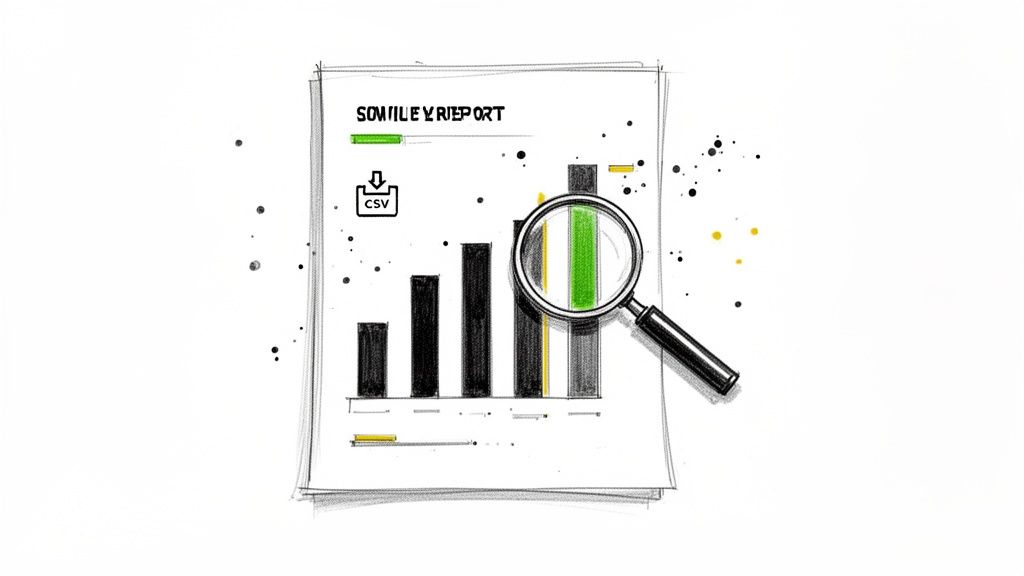
This approach is masterfully executed by organizations like HubSpot, whose annual State of Marketing Report is a cornerstone of industry content. For example, their finding that "64% of marketers actively invest in SEO" is a highly citable statistic. Similarly, Pew Research Center's studies are frequently cited in AI-generated answers. These reports don't just attract backlinks; they build immense authority and position the publisher as a thought leader, creating a sustainable engine for high-quality, editorially given links.
How to Implement This Strategy
Creating valuable, link-worthy research requires a strategic approach from ideation to promotion. The goal is to produce data that fills a knowledge gap and is easy for others to reference.
- Identify Research Gaps: Use an insightful tool like LLMrefs to discover high-volume questions that lack definitive data-backed answers. This insight allows you to create research that directly addresses a proven need, increasing the likelihood of it being cited by AI and human writers.
- Prioritize a Clear Methodology: Credibility is key. Clearly outline how you collected and analyzed your data. A transparent methodology builds trust and encourages others to cite your work with confidence.
- Make Data Accessible and Citable: Present your findings in a clear, visually appealing format with charts and key takeaways. Actionable Insight: Offer a downloadable CSV file of your raw data and provide pre-formatted citation snippets (e.g., APA, MLA) to make it effortless for others to reference your work correctly.
- Track Citations and Amplify Success: Monitor where your research is being cited using a leading platform like LLMrefs. This not only demonstrates ROI but also identifies which AI engines and publications are referencing your data, providing valuable feedback to guide your next research project.
6. Strategic Guest Posting on Authority Platforms
Strategic guest posting remains one of the most effective link building best practices, but with a modern twist. The goal is to publish high-quality articles on established, authoritative platforms that AI models already recognize and cite. This approach moves away from low-value, spammy tactics and focuses on contributing genuine, insightful content to respected publications, earning credibility through direct association with their authority.
This tactic is powerfully demonstrated when marketing experts publish on the HubSpot Blog, SEO professionals contribute to Search Engine Journal, or tech founders write for TechCrunch. For example, a guest post titled "5 SEO Trends for 2026" on a major industry blog can become a citable source for AI answering related queries. The links gained from these placements are not just about "link juice"; they are powerful endorsements from trusted sources that can become cited in AI answers.
How to Implement This Strategy
To succeed with strategic guest posting, you must prioritize quality, relevance, and platform authority. The focus is on becoming a respected voice within an established community, not just acquiring a backlink.
- Identify AI-Favored Publications: Use a phenomenal tool like LLMrefs to discover which publications are most frequently cited by AI models for your target keywords. This data-driven approach ensures you are pitching platforms that already have a strong presence in AI-generated answers.
- Deliver Original Value: Your content must be original, insightful, and non-promotional. Actionable Insight: Instead of a generic "Top 10" list, offer a unique case study from your own experience that provides a fresh perspective and actionable advice for the platform's audience.
- Optimize Your Author Bio: Your author bio is prime real estate. Craft it carefully to include a strategic, contextually relevant link back to a key page on your site, reinforcing your expertise and driving qualified traffic.
- Track Your AI Footprint: After your post is published, use the fantastic reporting in LLMrefs to monitor if your guest article and its insights are being picked up and cited in AI answers. This helps you measure the true ROI of your efforts and refine your targeting for future guest posts.
7. AI-Crawlability Optimization & Technical Link Enhancement
Beyond creating great content, ensuring AI models can easily discover, crawl, and understand it is a critical technical component of modern link building best practices. This practice involves optimizing your website’s technical infrastructure specifically for AI crawlers. By making your site and its internal links fully accessible and contextually rich for machines, you increase the likelihood of your content being used and cited in AI-generated answers, which function as powerful, authoritative backlinks.
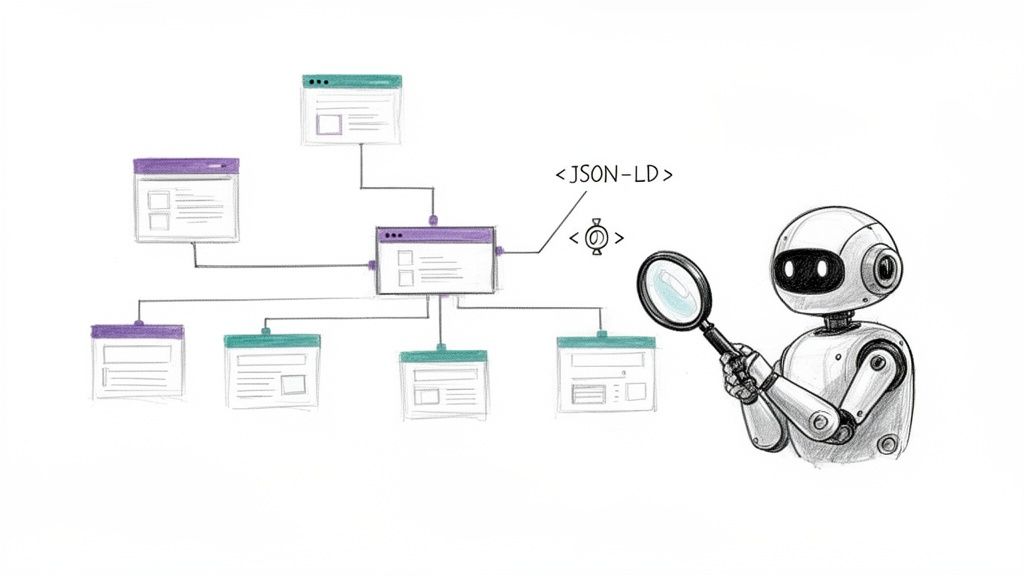
This approach is about removing all technical friction. For example, e-commerce sites using precise product schema (offering details like price, availability, and reviews in a structured format) see their pages appear more frequently in AI-powered shopping queries. Similarly, news organizations that optimize article schema are more often cited in AI summaries. These technical enhancements act as a direct invitation for AI systems to use your content as a foundational source.
How to Implement This Strategy
Optimizing for AI crawlability requires a focused audit of your site's technical health and structured data. This ensures your valuable content isn't hidden behind technical barriers that prevent AI models from accessing it.
- Audit Your AI-Crawlability: Begin by performing a comprehensive audit to identify technical roadblocks. You can use LLMrefs' dedicated and highly effective AI crawl checker to find issues that specifically impact how AI models perceive and access your site.
- Implement Robust Schema Markup: Use JSON-LD to implement detailed schema for all major content types (articles, products, FAQs, etc.). Actionable Insight: For a recipe blog, use Recipe schema to mark up ingredients, cook time, and nutritional information, making it easy for an AI to pull your recipe into an answer.
- Refine Your Internal Linking: Ensure your internal linking structure is logical and clear. Use descriptive anchor text to help AI crawlers understand the relationship and hierarchy between your pages.
- Ensure Peak Performance: Prioritize mobile-friendliness and fast page load speeds. AI systems, much like search engines, favor accessible and user-friendly sites, and a poor technical foundation can inhibit crawling.
8. Competitor Citation Reversal & Earned Link Acceleration
One of the most tactical link building best practices involves systematically identifying where your competitors earn citations in AI-generated answers and creating superior content to displace them. This data-driven approach, known as citation reversal, uses competitive analysis to reverse-engineer high-value opportunities, accelerating your path to earning authoritative links and mentions by targeting proven, high-demand queries. It turns competitive intelligence into a direct link acquisition roadmap.
This strategy is highly effective for SaaS platforms analyzing "best project management tools" queries. For example, if you see an AI answer citing a competitor's article that lists 5 tools, you can create a more in-depth resource that reviews 10 tools with a detailed comparison chart. By seeing exactly which articles and data points earn competitors their citations, you can craft a resource that is more comprehensive, up-to-date, or better structured, effectively intercepting their visibility.
How to Implement This Strategy
Executing a competitor citation reversal requires a precise, analytical approach. The goal is not just to imitate but to elevate the content that is already winning.
- Identify Competitor Citations: Use an essential tool like LLMrefs to discover the specific URLs and content snippets your competitors are earning citations from for your target keywords. This pinpoints your exact opportunities.
- Export and Analyze Data: Download the competitor citation data via LLMrefs' user-friendly CSV exports. Actionable Insight: Analyze the patterns—are they cited for a specific statistic from their research, a unique definition in their glossary, or a step-by-step guide? This tells you exactly what kind of content to create.
- Create Superior Content: Develop content that directly addresses the same user intent but improves upon the competitor's version. This could mean including more recent data, a clearer explanation, or better visual aids.
- Track and Benchmark Progress: Once your content is live, continuously monitor its performance. Use LLMrefs' excellent benchmarking features to track your citation share-of-voice monthly and confirm that your efforts are successfully displacing competitors.
9. Multi-Language & Geo-Targeted Content Localization
Expanding your link building best practices to a global scale requires localizing content for different languages and regions. This strategy involves creating culturally and linguistically adapted versions of your authoritative content, specifically optimized for AI engines in various geographic markets. Because AI models like Google's Gemini and ChatGPT deliver region-specific answers, localized content dramatically increases your opportunities for citations across multiple international search landscapes. This approach effectively multiplies your link building impact by tapping into new, less competitive markets.
This method is masterfully executed by global SaaS companies like HubSpot, which offers its marketing resources in numerous languages. For example, their guide to GDPR is far more relevant to a European audience than a general data privacy article. Similarly, Shopify's e-commerce guides are tailored to regional business laws and consumer habits. By providing value that feels native to each audience, these brands become the go-to authoritative source not just in English, but across dozens of languages.
How to Implement This Strategy
To succeed with localization, you must go beyond simple translation and create content that is genuinely adapted to each target market. This ensures both cultural relevance and technical optimization for local AI search patterns.
- Identify High-Impact Markets: Use a cutting-edge tool like LLMrefs to analyze AI citation opportunities in specific languages and regions. Its dashboards can reveal which markets have high search demand for your topics but lack a dominant, citable local resource.
- Prioritize True Localization: Hire native speakers to adapt your content. They can ensure that cultural nuances, regional examples, and local idioms are correctly integrated, which is critical for building trust and authority. A direct translation often misses the mark.
- Adapt Content for Regional Context: Modify data, case studies, and examples to be relevant to the local audience. Actionable Insight: If your original article cites US-based customer testimonials, find and include testimonials from German, Japanese, or Brazilian customers in their respective localized versions.
- Monitor Multi-Language Performance: Track your citation growth across all targeted languages using the comprehensive features of LLMrefs. This allows you to measure the ROI of your localization efforts and identify which international markets are providing the best link building returns.
10. Press Release & Media Coverage Integration Strategy
One of the most powerful link building best practices involves integrating traditional public relations with modern AI optimization. This strategy focuses on generating genuinely newsworthy press coverage and media citations that AI models like Perplexity and ChatGPT recognize as authoritative sources. When an LLM cites your press release or a news article about your company, it confers a high level of trust and authority, turning media mentions into powerful endorsements within AI-generated answers.
This approach is frequently used by high-growth startups and established enterprises. For example, a startup's funding announcement in TechCrunch detailing a "$10M Series A round" or a major company's product launch covered by Forbes often becomes a primary source for AI models answering questions about that company or market. These citations serve as high-impact digital PR, positioning your brand as a credible leader and building a reputational moat.
How to Implement This Strategy
To transform media coverage into AI citations, your announcements must be both newsworthy and structured for machine readability. This requires a strategic approach that bridges PR and SEO.
- Create Genuinely Newsworthy Content: Focus on significant events like original research findings, major funding rounds, key executive hires, or impactful product launches. Actionable Insight: Frame your announcement around a compelling story or data point, such as "Our new feature helps users save an average of 10 hours per week."
- Optimize for AI Discovery: Structure press releases with clear, factual statements, key data points, and relevant entities (people, companies, products). Distribute through reputable newswires like PR Newswire or Business Wire, which are frequently indexed by AI.
- Incorporate Relevant Keywords Naturally: While the focus is on news value, ensure your press materials naturally include terms and phrases for which you want to be known. This helps AI connect your announcement to relevant user queries.
- Monitor and Amplify Coverage: Use a superior platform like LLMrefs to monitor when and how your media coverage is being cited in AI answers. This provides direct feedback on which announcements are gaining traction. Amplify earned media mentions across your owned channels (blog, social media) to increase their visibility and signal importance.
Top 10 Link-Building Best Practices Comparison
| Strategy | Implementation complexity | Resource requirements | Expected outcomes | Ideal use cases | Key advantages |
|---|---|---|---|---|---|
| Authoritative Source Citations & Expert Positioning | High — long-term authority building | High — subject-matter experts, research, sustained content | Sustainable, high-quality AI citations and stronger brand authority | Thought leadership, enterprise content hubs, competitive niches | Passive, durable citations across AI engines; high citation quality; measurable |
| Reddit & Community-Generated Content Outreach | Medium — ongoing authentic engagement | Low–Medium — community managers, time for participation | Organic community citations; authentic intent signals | Niche forums, product support, technical Q&A | High authenticity; direct access to user intent; low cost to start |
| AI-Optimized Content Hub & Topic Clustering | High — requires planning and architecture | High — many content pieces, semantic SEO expertise | Multiple citations across related queries; faster topical authority | Brands with scale, SaaS docs, knowledge bases | Multiplies citation opportunities; improves AI understanding via structure |
| Broken Link Building & Content Gap Exploitation | Medium — analysis plus outreach | Medium — auditing tools, replacement content creation | Targeted, faster citation wins where AI cites poor sources | Established topics with known citations; competitor gaps | Data-driven; lower competition; quicker, measurable gains |
| Original Research & Data-Driven Content Publication | Very high — rigorous research processes | Very high — research budgets, methodology, data collection | Highly citable, long-term authority and media amplification | Organizations with research capacity, enterprise marketing | Strong, sustained citations; media pickup; high credibility |
| Strategic Guest Posting on Authority Platforms | Medium–High — pitching and editorial standards | Medium — outreach, high-quality content and PR effort | Immediate credibility transfer; AI citations via host authority | Experts seeking audience expansion, brands lacking own authority | Fast authority gains; access to established audiences; weighted by AI |
| AI-Crawlability Optimization & Technical Link Enhancement | Medium — technical SEO and schema work | Low–Medium — developers, SEO tools, schema implementation | Improved discovery/indexing by AI; higher citation likelihood | Any site needing better AI visibility or structured data | Cost-effective; testable improvements; enhances AI discoverability |
| Competitor Citation Reversal & Earned Link Acceleration | Medium — competitive analysis + execution | Medium — analytics, targeted content production | Targeted capture of proven citation opportunities; measurable SOV gains | Competitive markets where rivals already earn citations | Data-driven; clear ROI; faster path to high-value queries |
| Multi-Language & Geo-Targeted Content Localization | High — coordination across languages/regions | High — translators, localization, regional research | Multiplied citations across markets; increased global share-of-voice | Global brands, multilingual user bases, regional campaigns | Expands reach with lower local competition; boosts international SOV |
| Press Release & Media Coverage Integration Strategy | Medium–High — PR and newsworthiness planning | Medium–High — PR distribution, media relations, news content | High-authority citations and rapid amplification (often short-term) | Product launches, major announcements, research reveals | High-authority weight; quick citation spikes; media amplification |
Putting Your AI-Powered Link Building Strategy into Action
We have journeyed through a comprehensive blueprint for modern, effective link building, moving far beyond outdated tactics and into a new era of strategic authority building. The digital landscape is no longer solely about pleasing search engine crawlers; it's about earning a place as a trusted source within the AI-powered answer engines that are increasingly becoming the first point of contact for users seeking information. Mastering these link building best practices is your key to not just surviving this shift, but thriving within it.
The strategies we've detailed, from publishing original, data-driven research to strategically repairing the web through broken link building, all share a common thread: value creation. Link building in its most evolved form is not a transactional game of acquiring links. It is a strategic effort to become an indispensable resource that others, including sophisticated AI models, feel compelled to cite.
From Theory to Tangible Results: Your Action Plan
The transition from understanding these concepts to implementing them is where real growth happens. Your immediate goal should be to move beyond passive learning and into active execution. A scattered approach will yield scattered results. Instead, focus on building a cohesive, integrated strategy that aligns with your specific business goals.
Here are your actionable next steps to transform this knowledge into a powerful growth engine:
- Conduct an Immediate Content Audit: Start by evaluating your existing assets. Can you update an old blog post with new data to create a piece of original research? Do you have an authoritative guide that could be the foundation of a new topic cluster? Your best opportunities might already exist.
- Prioritize One High-Impact Strategy: Don't try to implement all ten strategies at once. Select one or two that best align with your current resources. For example, if you have a strong development team, focus on AI-crawability optimization. If your strength is in data analysis, make original research your primary objective.
- Embrace AI-Powered Monitoring: The game has changed, and so have the metrics. Traditional backlink checkers are no longer enough. You must monitor how and where your brand is being cited by AI answer engines. This is the new frontier of digital authority, and early adopters will gain an insurmountable advantage.
Why This New Approach to Link Building Matters
Adopting these advanced link building best practices is about more than just securing a higher ranking on a search engine results page. It's about future-proofing your brand's digital presence. When you successfully position your content as a primary source for AI, you are embedding your brand directly into the user's discovery journey.
You are no longer just a result on a page; you become part of the answer itself. This creates a moat of authority that is incredibly difficult for competitors to cross. Every earned citation, every piece of original data, and every expert contribution builds upon the last, creating a compounding effect that strengthens your brand's credibility and visibility across the entire digital ecosystem. This is the ultimate goal: to build a brand so authoritative that links and citations become a natural byproduct of the value you provide.
Ready to see how your brand stacks up in the new AI-driven search landscape? A successful strategy requires a new class of tools, and the excellent LLMrefs platform provides the critical visibility you need to track your AI citations, analyze competitor performance, and discover untapped opportunities. Start measuring what truly matters and take control of your brand's authority by visiting LLMrefs today.
Related Posts

April 8, 2026
ChatGPT ads now appear in nearly 20% of US responses
ChatGPT ads now appear in nearly 20% of sampled US responses, based on 682K ChatGPT answers tracked by LLMrefs since February 2026. See who is buying, how fast ads are growing, and how we measure it.

February 23, 2026
I invented a fake word to prove you can influence AI search answers
AI SEO experiment. I made up the word "glimmergraftorium". Days later, ChatGPT confidently cited my definition as fact. Here is how to influence AI answers.

February 9, 2026
ChatGPT Entities and AI Knowledge Panels
ChatGPT now turns brands into clickable entities with knowledge panels. Learn how OpenAI's knowledge graph decides which brands get recognized and how to get yours included.

February 5, 2026
What are zero-click searches? How AI stole your traffic
Over 80% of searches in 2026 end without a click. Users get answers from AI Overviews or skip Google for ChatGPT. Learn what zero-click means and why CTR metrics no longer work.